The mental health-informed nutrition practice that providers trust.
Evidenced-based nutrition counseling compliments other forms of mental health care, it doesn’t replace it.
Davis Nutrition Co is the trusted specialty nutrition practice for people living with mental health challenges like mood disorders, anxiety disorders, and neurodivergence. We partner with patients and their healthcare providers to deliver compassionate, evidence-based nutrition care that supports lasting mental and physical well-being.
One of my favorite intake questions is “who’s on your healthcare team?" This helps me determine how much support my clients have and identify if there are any gaps in care while we work together. If you’re a PCP, therapist, medical specialist, or prescriber I’d love to have a conversation about a referral relationship. When we work together, our patients can thrive!
Book a call with me here: LINK.
Which patients are a good fit?
Which diagnoses do you commonly work with?
What outcomes can providers expect?
What does communication look like?
How do referrals work?
Do you accept insurance?
What are typical wait times?
Can patients self-schedule after a referral?
How do you coordinate care?
referral process: fax, email, referral form, patient self-scheduling, insurance, wait time
what to expect: collaborative care, communication, progress updates, shared treatment goals
when to refer: skipping meals, appetite changes, med side effects, poor nutrition, …..
F A Q
What’s the difference between a dietitian and a nutritionist? (and why it especially matters in mental health care)
Referring is easy
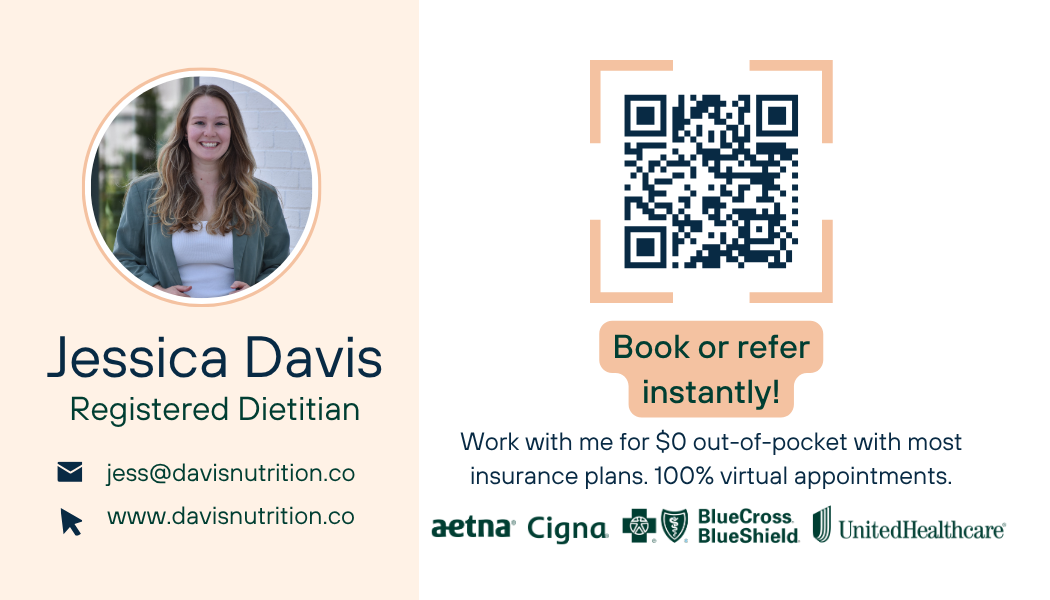
Option 1 (general interest): Share this website or my business card.
Option 2 (ready to book): Fill out provider referral form, and I will contact the patient about next steps. Or, share this direct booking link with the patient.
Contact information:
email:
phone:
fax:
Common mental health diagnoses we work with:
depression
anxiety
PTSD
CPTSD
bipolar disorder
OCD
ADHD
ASD
Common referral reasons:
weight concerns (both unintentional weight loss or weight gain)
appetite challenges
stress around food choices
low energy or fatigue
overwhelm with food related tasks (shopping, cooking, cleaning)
prediabetes/diabetes
hyperlipidemia
hypertension
iron deficiency
vitamin D deficiency
digestive concerns (GERD, IBS, etc.)
Good fit patient referrals:
ready to actively participate in behavior change
curious about sustainable, health routines
ready to try a new approach to nutrition that works with their mental health, not against
not looking for a strict diet or set of food rules
not experiencing an active eating disorder
not looking for quick-fix weight loss solution
Common challenges for providers:
you don’t have formal nutrition education so you’re unsure what is helpful to say when nutrition, food, or body topics come up
you have nutrition knowledge to share but don’t have the time to discuss it in your appointments
you don’t know the benefits of medical nutrition therapy, particularly for those living with mental health challenges
you don’t have a referral partner you trust
you don’t know a specialized dietitian that accepts insurance AND has immediate openings
your health system dietitians have long wait types or low-touch support
you don’t want the paperwork burden of sending an actual referral for insurance (don’t worry nutrition care doesn’t usually need this!)
you’re concerned with coordination of care
Coordinating care in practice
we can coordinate care once the patient has signed a Release of Information form
progress notes can be sent out every 6 weeks if you would like to know how their nutrition counseling is progressing their treatment plan
if nutrition, food, or body image concerns come up in your practice you may reach out to the dietitian for guidance
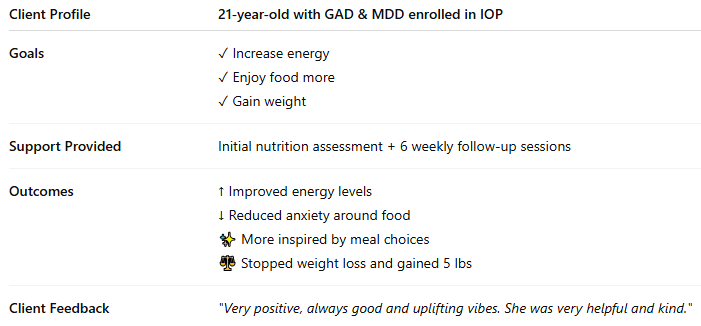
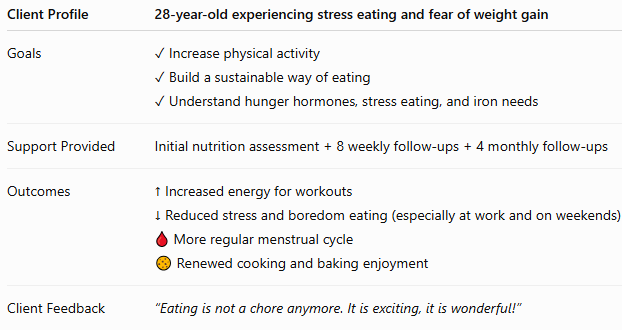
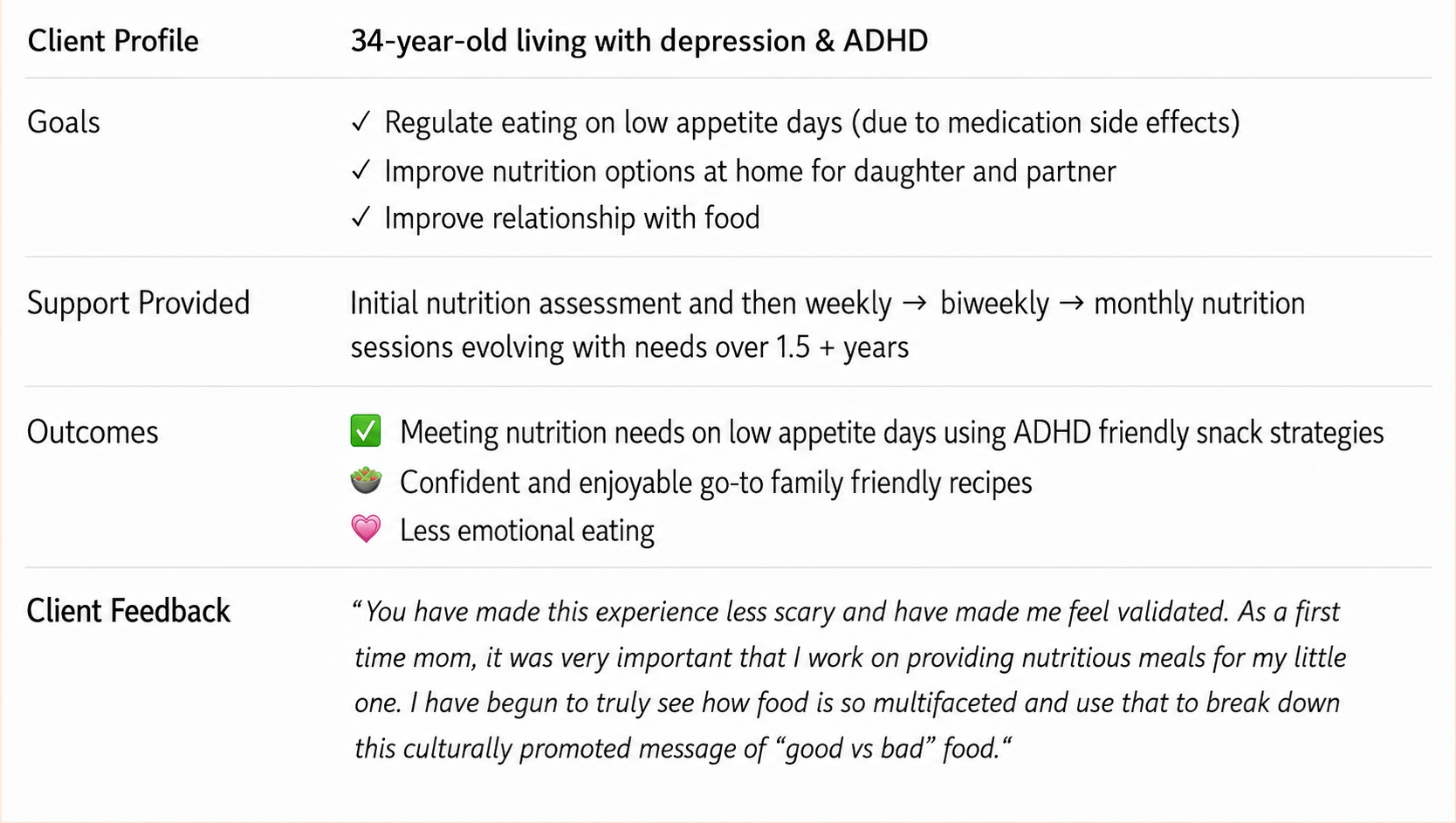
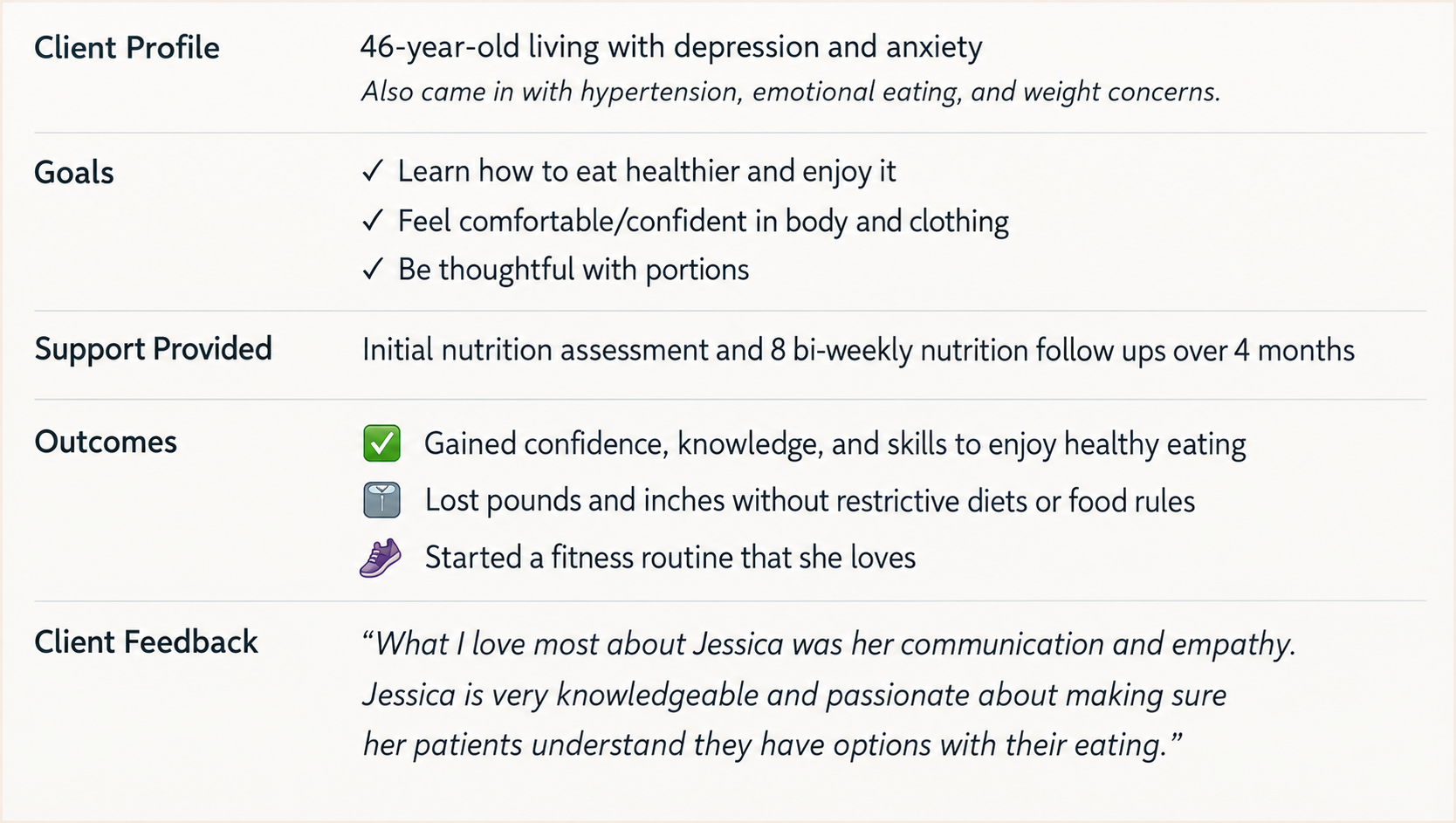
Common outcomes for patients
1. More consistent, manageable eating habits
Clients develop practical strategies to eat more consistently, build balanced meals and snacks, and navigate periods of low appetite, low energy, or competing demands.
2. Improved appetite and food-related coping
Clients build skills to recognize hunger, respond to cravings, and make food choices with less distress, guilt, or rigidity.
3. Greater flexibility and resilience with behavior change
Clients learn to adapt nutrition habits to changing energy and capacity, troubleshoot barriers, and resume progress after setbacks without relying on perfection.
4. Increased confidence in managing health
Developing greater trust in their bodies, a more flexible understanding of nutrition, and practical skills to support their health goals. Clients may also become more engaged in their healthcare, looking forward to receive feedback and support from their broader care team.
Case Studies